Home / Buying guides / Buying a used electric car
Buying a used electric car
Battery state of health replaces compression, warranty transferability replaces the cambelt question, and on some early cars the battery was leased rather than sold with the vehicle.
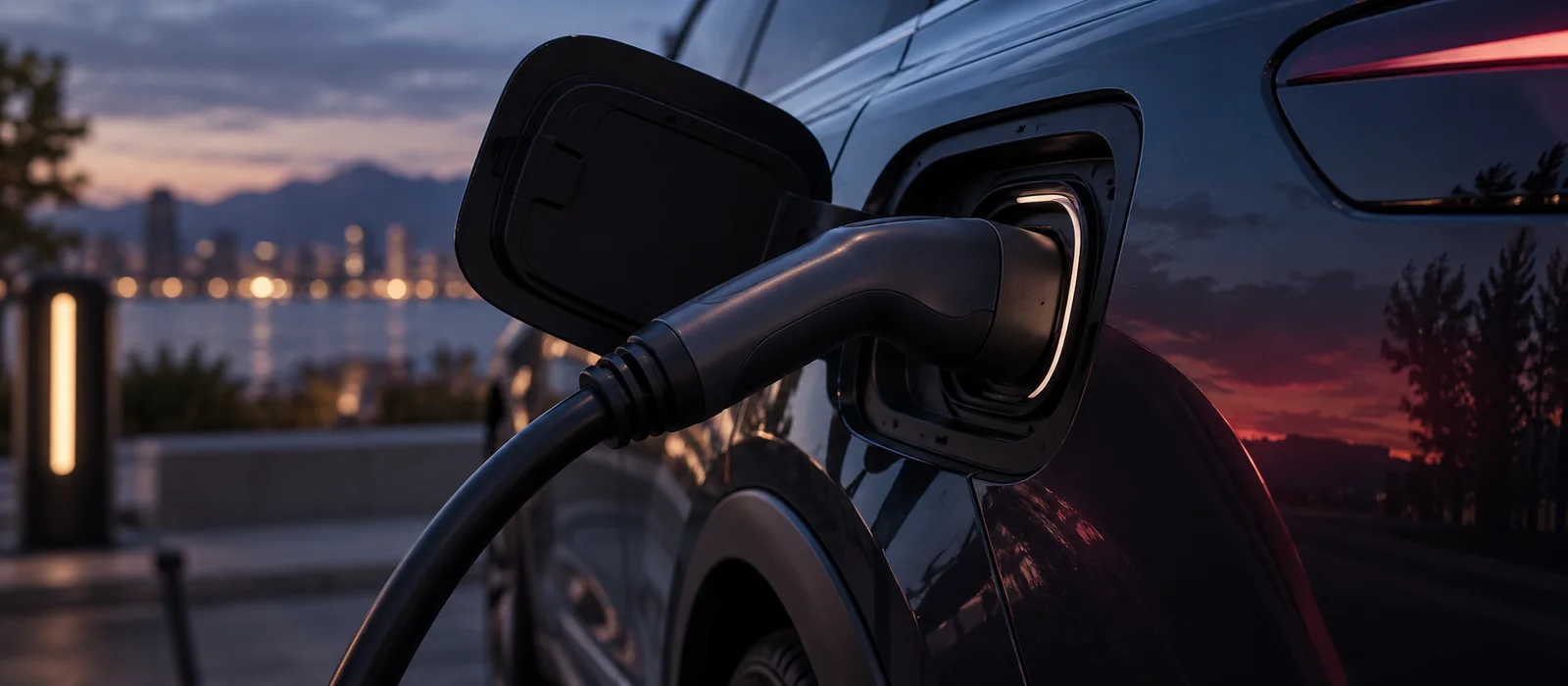
An electric car removes most of the used-car checklist and replaces it with a shorter one. There is no cambelt, no particulate filter, no exhaust, no clutch and no gearbox oil service in the conventional sense. What there is instead is a battery, the charging hardware, and software.
Battery state of health
State of health expresses how much usable capacity the pack retains against when it was new. It is the closest equivalent an electric car has to a compression test.
Where to get it: many modern electric cars display a figure through the dashboard or the manufacturer’s app, and independent testing services will produce a written report or certificate from a diagnostic session. Either ask the seller for one or budget for one.
Two pieces of context before you interpret the number. Large-scale UK testing of used electric cars has found average battery health high — comfortably above the level that would trigger a warranty claim — and high mileage does not automatically mean a degraded pack. Cars a few years old rarely show a range loss the driver would notice. Judge the individual car rather than the category.
Battery warranty, and whether it transfers
The traction battery carries its own manufacturer warranty, separate from the vehicle warranty and usually defined in years, miles and a minimum retained capacity. Two questions:
- What remains — in both years and miles, whichever runs out first.
- Whether it transfers to a new keeper. Some do and some do not, and this is the single detail most often assumed rather than checked.
The battery lease question
Some early electric cars were sold with the battery on a separate monthly lease rather than included in the purchase. The Renault Zoe is the well-known UK example; Renault dropped the scheme for the newer model in 2020, but both kinds remain on the used market, and a battery-included car commands a materially higher price than a leased-battery car of the same age and mileage.
A lease is not automatically worse. It typically includes replacement of the battery if capacity falls below a stated threshold — which is a genuine protection an outright owner does not have — and Renault’s scheme bundled cover for running out of charge. But you must know which kind of car you are buying, what the monthly commitment is, and that the agreement transfers cleanly to you.
Charging, in practice
- Ask how the car has been charged and how often on high-power rapid chargers.
- Check the charge ports and flaps operate, and that the supplied cables are present and undamaged. Replacements are not trivial.
- If the seller has a home charger, ask them to start an actual charge while you are there.
- Establish what the car will do at home on a standard supply, which is the charging that matters most for day-to-day use.
The 12-volt battery
Electric cars still have a conventional 12-volt battery running the low-voltage systems, and when it fails the car can become unusable in ways that feel disproportionate — owners of some models have been locked out entirely. It is a cheap part and a common fault; ask when it was last replaced.
Tax and charges
Electric cars have no tailpipe emissions and no Euro standard, so the ULEZ and clean air zone charges do not apply to them on emissions grounds. They are no longer exempt from vehicle excise duty, however: since April 2025 they pay a first-year rate and then the standard rate, and the expensive-car supplement can apply at a higher list-price threshold. Check the actual rate against the registration.
Everything else still applies
Run the recall check, read the MOT history, and do the same paperwork checks as for any other car. An electric drivetrain does not exempt a vehicle from being stolen, written off or on finance.