Home / Buying guides / Mileage and clocking: reading the numbers
Mileage and clocking: reading the numbers
Why a recorded mileage can be false, what the free MOT history actually proves, and the physical checks that no database performs.
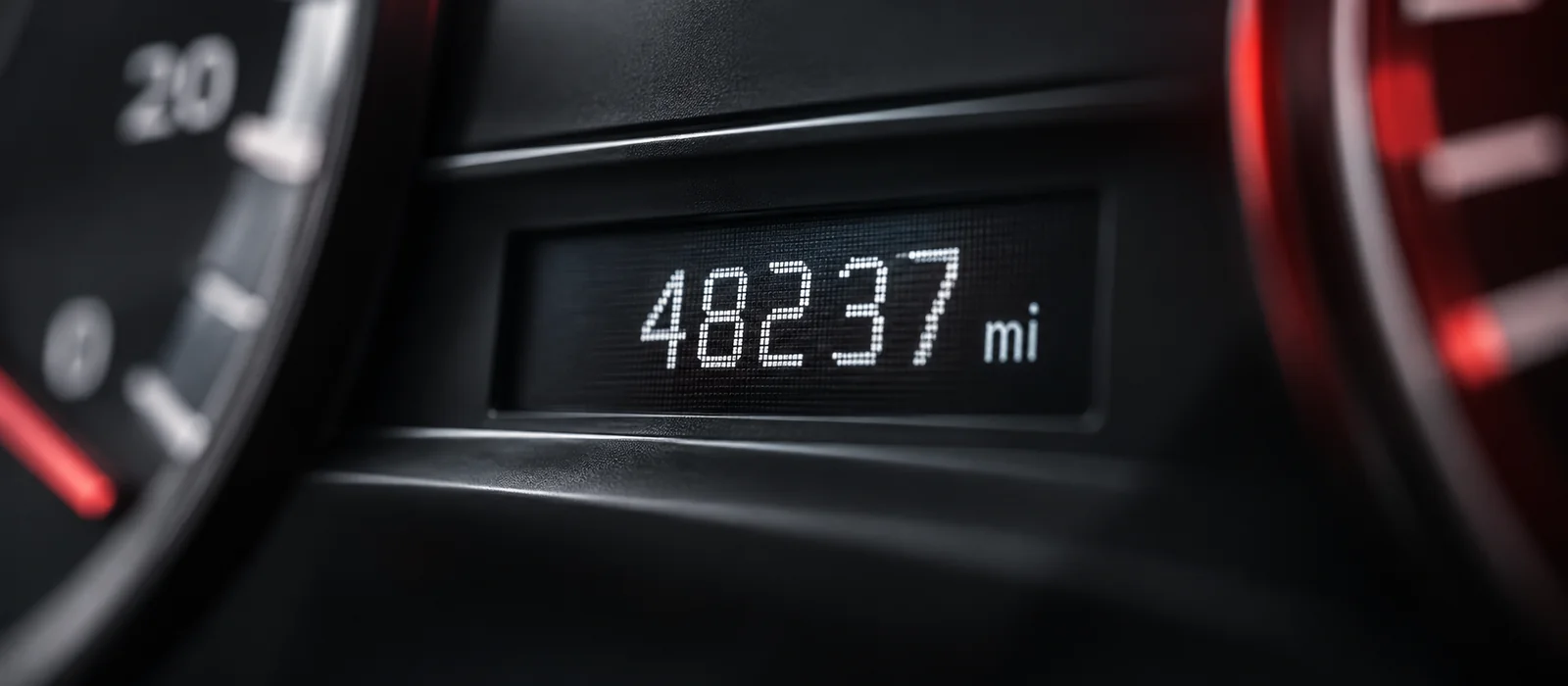
A odometer reading is a claim, not a fact. Reducing it — clocking — makes a car look younger than it is, and it remains a live problem in the UK used market.
Where it sits legally
Adjusting an odometer is not in itself the offence. Selling a vehicle on a mileage the seller knows to be false is: it misleads a consumer about the goods, which engages the Consumer Protection from Unfair Trading Regulations, and where there is intent to gain by deception it can be pursued as fraud. Trading standards guidance for motor traders treats mileage representation as one of the areas most likely to land a dealer in trouble.
For a buyer, the practical consequence of that framing is simple: what matters is what the seller told you, and whether you can show it later.
The free check that does most of the work
Every MOT test records the mileage on the day, and that record is published. The DVSA history service returns every test the vehicle has had, with the reading each time.
What you are looking for is not a number but a shape. Mileage accumulates; it does not fall. Any reading lower than an earlier one is physically impossible under normal use, and a long flat stretch followed by a jump is nearly as interesting.
What the MOT history cannot tell you
Three real limits, all of which are why this check is a start rather than an answer.
- It begins at the car’s third birthday. Everything before the first test is unrecorded.
- It samples once a year. A car clocked and sold between two tests leaves no trace until the next one.
- It records what a tester typed. Transcription errors happen, and a single odd figure surrounded by a consistent trend is more likely a typo than fraud.
The checks a database cannot make
Wear should agree with the claim. Steering wheel rim, gear knob, pedal rubbers, driver’s seat bolster, door handles and the key itself all wear at roughly predictable rates. A pristine interior on a car claiming high mileage — or a heavily worn one on a car claiming low — is a mismatch no lookup will surface.
Paperwork should agree too. Service records, old MOT certificates, invoices from garages and tyre receipts all carry dates and often mileages. A file that is complete except for one missing period is worth asking about.
If the numbers do not add up
Do not argue the point on the forecourt. Ask for the mileage to be stated in writing on the invoice or advert, and keep the advert. A written representation is what turns a suspicion into something a consumer body or trading standards can act on later.
General information only. This is not legal, financial or technical advice, and rules change. Each page links to the official source — confirm the current position there before acting on it. This site sells nothing and is not a dealer, garage or broker.