Home / Buying guides / Euro standards, the ULEZ and clean air zones
Euro standards, the ULEZ and clean air zones
Diesel cars need Euro 6 and petrol cars need Euro 4 to drive in the London ULEZ without a daily charge. What the Euro standards are, where to find a car's, and how the charging clean air zones differ.
For a used car that will be driven in or near a charging zone, the emissions standard is not a technical footnote. It is a recurring cost that no amount of maintenance removes, and it is the main reason two otherwise identical cars are priced differently.
The two numbers that matter
London’s Ultra Low Emission Zone asks for:
- Euro 6 for diesel cars
- Euro 4 for petrol cars
The asymmetry is deliberate and it is about nitrogen oxides. Diesel combustion produces considerably more NOx than petrol, so the standard diesels must reach is a much later one.
As a rough guide to age, petrol cars generally meet Euro 4 if registered after January 2006, and diesel cars generally meet Euro 6 if registered after September 2015. Those are guides, not rules — some vehicles met the standard before it became mandatory, and the answer for any individual car comes from the vehicle, not from its registration year.
Where to find a car’s Euro standard
Three places, in increasing order of reliability:
- Section D.2 of the V5C carries the Euro status on newer vehicles.
- The DVLA vehicle enquiry service returns the European emissions status against a registration, along with the CO2 figure and the real driving emissions level.
- The TfL vehicle checker answers the practical question directly: does this registration have to pay. Where the two disagree, this is the one that decides.
The ULEZ in practice
The zone operates twenty-four hours a day, every day of the year except Christmas Day, across all London boroughs and the City of London. A non-compliant car pays a daily charge for any day it drives inside the zone, however short the trip. The charge level is set by TfL and changes; check the current figure on their page rather than relying on a number written somewhere else.
Compliance across the vehicle fleet is high and rising — TfL reported more than eight in ten vehicles meeting the expanded standards, up from under four in ten when the expansion was first announced — which is another way of saying that a non-compliant car is now the exception and is priced accordingly.
Clean air zones outside London
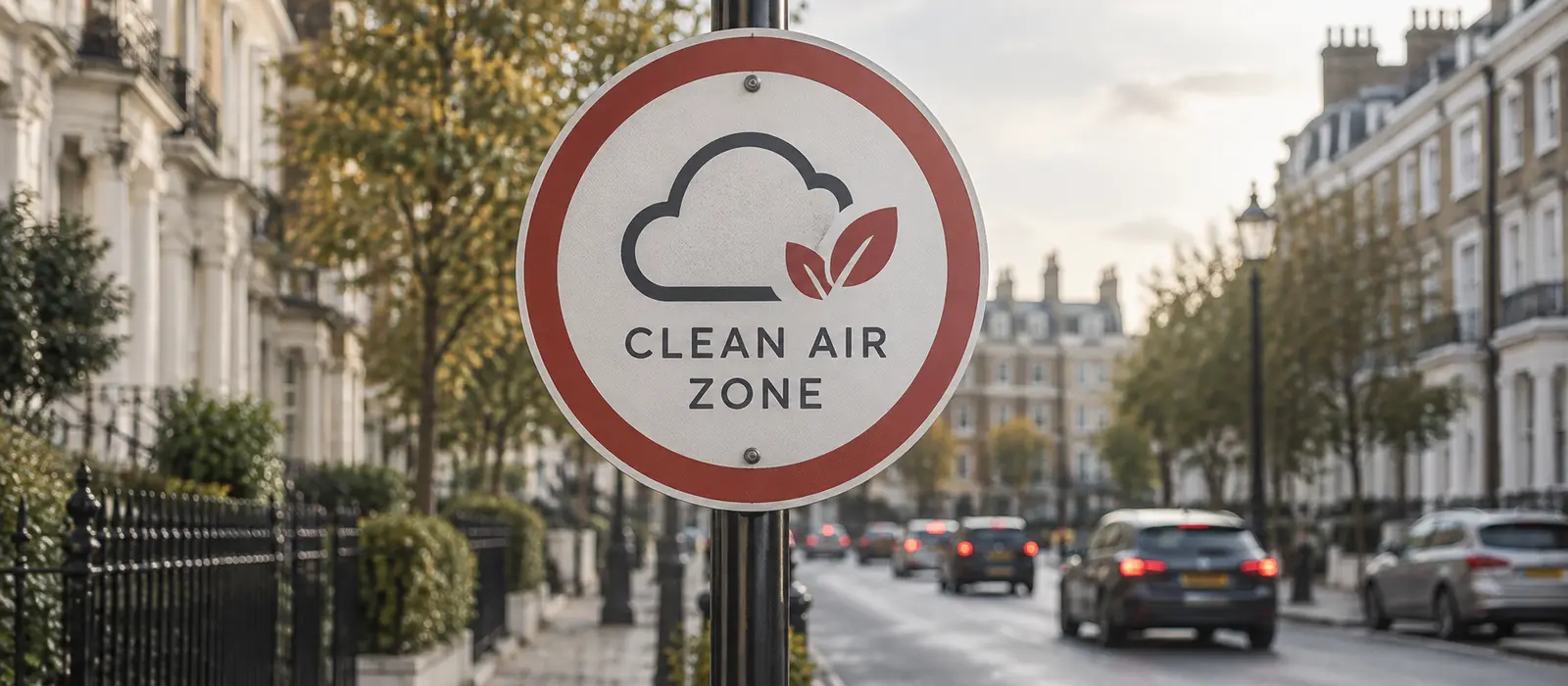
England has a separate scheme of clean air zones, run by local authorities and coordinated through a national government service. They are not all the same: some charge, some do not, and the classes of vehicle charged differ between them. Bristol’s zone, for example, began in November 2022 and charges around the clock, every day of the year.
The government publishes a single vehicle checker covering the charging zones. Use it with the registration number of the specific car; the answer depends on the zone as well as the vehicle.
What this means when you are buying
- A Euro 5 diesel is materially cheaper to buy than the Euro 6 equivalent, and the reason is the daily charge. If you never enter a zone, that discount is real value. If you do, it is not a discount at all.
- A petrol car of almost any modern age clears the ULEZ petrol standard, which is why the emissions question rarely decides a petrol purchase.
- Electric cars have no tailpipe emissions and no Euro standard, so the emissions charges do not apply to them on those grounds. That is separate from vehicle tax, which they do pay.
- Hybrids and plug-in hybrids are assessed on their engine. A petrol hybrid is a petrol car for these purposes.
Do the check before you travel to see the car, not after you own it.